Showing posts with label historical fiction. Show all posts

Sunday, May 3, 2015

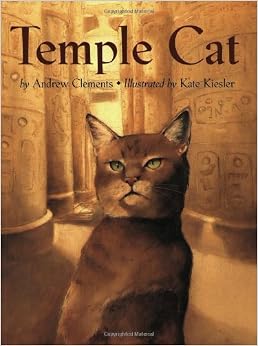
Temple Cat

Temple Cat
By Andrew Clements
Illustrated by Kate Kiesler
Published by Clarion Books (1996)

This is the story of a temple cat who dreams of living as a normal cat outside the temple walls. He slips out one night to follow his dream, and discovers what his heart desires at the edge of the sea. This is a great introduction to historical fiction for young readers in grades one and two. It presents the Egyptian culture from the unique perspective of a cat, which young readers will adore. The illustrations are very realistic, making Egypt come alive for readers.

While Andrew Clements is not always known for his picture books, he is a successful writer. Learn more about him on his website!


Clements, A., & Kiesler, K. (1996). Temple cat. New York: Clarion Books.

Tuesday, April 7, 2015

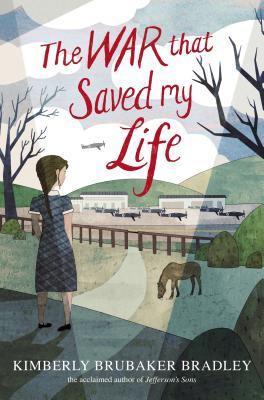
The War That Saved My Life

The War that Saved my Life by Kimberly Brubaker Bradley
Published by Dial Books (2015)

This piece of historical fiction takes place during World War II. The main character, Ada, is relatable to intermediate readers because she is nine years old. Ada and her brother are evacuated from their home and abusive mother in London during the war. Ada must overcome her disability with her twisted foot, but she does not let this stop her from learning to ride a horse or watching German spies. The children go to live with a woman and struggle to develop a trusting relationship with her. However, throughout the novel they all discover love and hope once again. The children are on a new adventure during a difficult time in history. 

I would recommend this novel because it takes a different viewpoint on WWII. It is interesting to hear the perspective of a young girl in London during the war. I think this novel would be a great addition to the classroom because it tells the story from the perspective of a young girl. It also has a touching theme of family, along with an adventure plot. This would be a great way to get students to read historical fiction, and it is new to the library!


Bradley, K. B. (2015). The war that saved my life.

Tuesday, March 17, 2015

One Crazy Summer

One Crazy Summer
By Rita Williams-Garcia
Published by Amistad (2010)

Winner of the Coretta Scott King Award in 2011
Newberry Honor Book in 2011
(plus many many more!)

Our class read this award winning novel and created lesson plans based on the story. The moving story takes place during the civil rights movement in Oakland, California. Three young girls, Delphine, Vonetta, and Fern fly out to visit their long lost mother. With few memories of her, it leads to an adventurous and crazy summer involving the Black Panthers. I can see why this book won so many awards. Rita Williams-Garcia keeps you engaged and laughing even during heavy topics.

It is a great way for young readers to see the civil rights movement from a child's perspective. Not all students may be ready for the hot topic, but it is important for all students to learn about. The book would be a great class read to connect to social studies. Thanks to my wonderful classmates I have some great lesson ideas too!

Williams-Garcia, R. (2010). One crazy summer. New York: Amistad.

Thursday, February 19, 2015

Bud, Not Buddy

Bud, Not Buddy by Christopher Paul Curtis
Published by Delacorte Press 1999

Newberry Honor Book
Coretta Scott King Honor Book
ALA Notable Book
ALA Best Book for Young People
A Horn Book Fanfare
A Bulletin Blue Ribbon Book
A New York Times Book Review Best Book
A Publishers Weekly Best Book

With all these awards, you can see Bud, Not Buddy is a must read book. It was a book I could easily relate to because I grew up and still live in Michigan. It tells the story of ten year old Bud, a motherless boy, during the Great Depression. He runs away in search of his father with a suitcase of important things, and a flyer that he believes will lead him to his father. The book follows Bud's adventure to find his father.

Bud, Not Buddy would be a great book to read when learning about the Great Depression and all that is associated with that era such as jazz music.

This blog has some great project ideas related to the book!

Curtis, C. P. (1999). Bud, not Buddy. New York: Delacorte Press.

Monday, January 26, 2015

The Bat Boy & His Violin

The Bat Boy & His Violin by Gavin Curtis
Illustrated by E.B. Lewis
Published by Simon & Shuster (1998)
Coretta Scott King Award

The Bat Boy & His Violin takes place around the 1920s and 1930s during the time of the Negro National Baseball Leagues. Reginald, a young boy is a gifted violinist. He spends all his free time practicing in the house. His father is manager of the Dukes, the worst Negro team in the league. They need a bat boy, so his father selects Reginald to come be the bat boy of the Dukes. Reginald is not thrilled with the decision because he doesn't think he will have enough time to practice his violin. He begins as a bat boy and struggles at his duties. His father tells him to take a break and play his violin. As he plays his violin, the Dukes start to play better and end up winning their game. The Dukes credit their victory to Reginald and his violin. When they play their final game of the season against the best team of the league, they narrowly lose and Reginald feels bad he couldn't help them win. His father reassures him that his violin playing was a huge part of their success. He finally gets to perform in from of the team, family, and friends at his home; it was a recital to remember for Reginald.

While the story is fiction, it takes place in the historical framework of segregation. It would fit well into a history unit about segregation and baseball at that time in American history. It would give students a good view into the life of some people during that time. It also has a large music theme. Students who play the violin could easily understand Reginald's position. It could be a supporting book to a unit on Bud, Not Buddy also due to its music theme and historical placement.

The detailed water-color illustrations catch your eye. E.B. Lewis researched the time period in order to make his paintings most realistic. The language is a bit difficult for young readers.

The Coretta Scott King Award alone shows that this book represents the ideals of peace, non-violent social change, and brotherhood. This is a positive book to connect to our nation's past.

Curtis, G., & Lewis, E. B. (1998). The bat boy & his violin. New York: Simon & Schuster Books for Young Readers.