Sunday, May 3, 2015

Temple Cat

Temple Cat
By Andrew Clements
Illustrated by Kate Kiesler
Published by Clarion Books (1996)

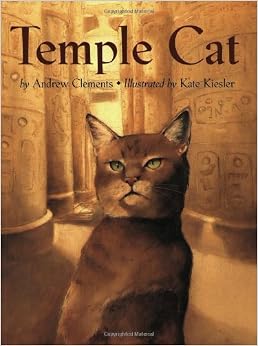
This is the story of a temple cat who dreams of living as a normal cat outside the temple walls. He slips out one night to follow his dream, and discovers what his heart desires at the edge of the sea. This is a great introduction to historical fiction for young readers in grades one and two. It presents the Egyptian culture from the unique perspective of a cat, which young readers will adore. The illustrations are very realistic, making Egypt come alive for readers.

While Andrew Clements is not always known for his picture books, he is a successful writer. Learn more about him on his website!


Clements, A., & Kiesler, K. (1996). Temple cat. New York: Clarion Books.

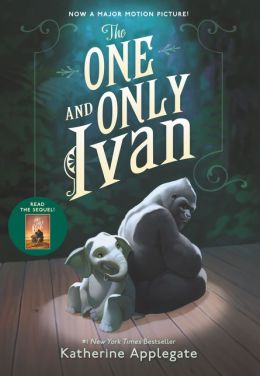
The One and Only Ivan

The One and Only Ivan
By Katherine Applegate
Published by Harper Collins (2012)

Newberry Medal Winner 2013

Ivan is a gorilla who lives at a mall for many years. He doesn't even think of his life back in the jungle, but rather watches TV, paints, and hangs with his friends Stella and Bob. Soon Ivan meets Ruby, a small elephant who makes him see his life in a new way. The heartwarming book has themes of friendship, art, and hope. I would recommend this book as a class read aloud because it is such a crowd favorite! There are many resources available to help incorporate the book into your classroom!

Check out this link to great classroom ideas from Pinterest.

Check out the website and book trailer below!

Applegate, K. (2012). The one and only Ivan. New York: Harper.

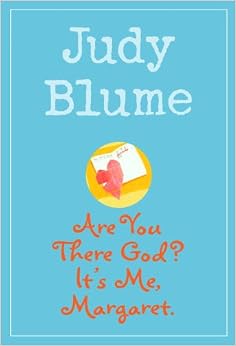
Are You There God, It's Me Margaret

Are You There God? It's Me, Margaret
By Judy Blume
Published by Bradbury Press (1970)

Are You There God? It's Me, Margaret is a coming of age story that almost every middle school girl will relate to. From a new school, boys, and physical changes, Margaret handles the awkward middle school years with humor and perseverance. I read this story when I was in middle school, and it has left a lasting impression on me. I would easily recommend this to any of my young female students. The quick read may not be openly discussed, but I believe many girls can relate to Margaret. Judy Blume is a wonderful author for all students to know.

Hear from Judy herself about the book!


Blume, J. (1970). Are you there God? It's me, Margaret. Englewood Cliffs, N.J: Bradbury Press.

The Fault in Our Stars

The Fault in Our Stars
By John Green
Published by Dutton Books (2012)

While I wouldn't have guessed I would be teaching any students who be reading The Fault in Our Stars, I was proven wrong when substitute teaching. I found out quickly that sixth grade girls were huge fans of the book. This sparked my interest, especially since many of my close friends raved about the book. I was not disappointed in this young love story.

It tells the emotional story of Hazel and Augustus. Hazel is faced with a terminal cancer diagnosis. The two meet in a support group for cancer survivors and those suffering from cancer currently. The rest is history as the two fall in love. I won't ruin the ending, but you will sure be surprised when you finish reading, and most likely in tears. The movie also had my mother and I in tears.

This is mature story that will not be appropriate for all readers, but it is a good book to connect with young female readers. John Green is a well-liked author with many books that would be great to recommend. Check out the movie trailer below!


Green, J. (2012). The fault in our stars.

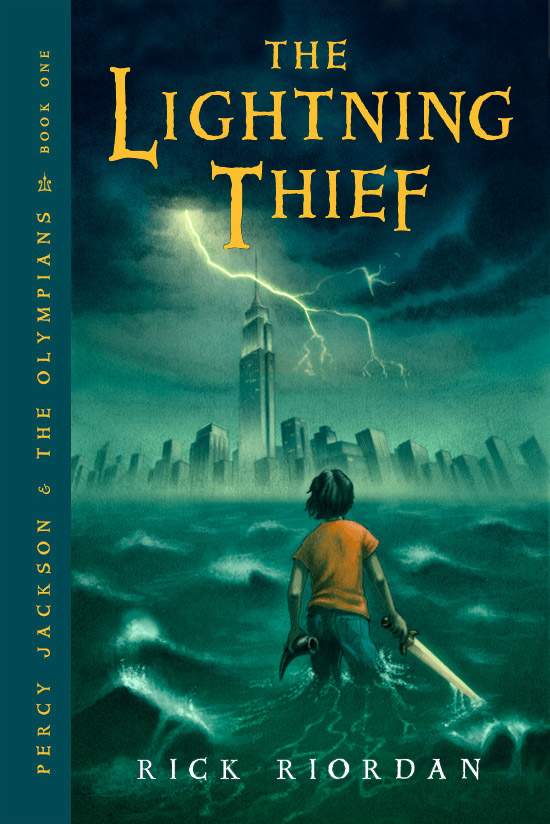
The Lightning Thief

The Lightning Thief
By Rick Riordan
Published by Miramax Books (2005)

When I step into my fourth grade classroom, I can easily spot several students reading Rick Riordan books. Both girls and boys really enjoy the fantasy adventure books that he writes. I myself recall reading The Lightning Thief when I was their age. Percy Jackson, a twelve-year old boy, goes on an adventure with greek gods to catch the thief of Zeus' master bolt. He is faced with many enemies on his journey. He also must deal with an Oracle of betrayal and a father he doesn't know.

If you are teaching grades 3 through 5, this a must have book in your classroom library as it appeals to many. It's also great because it is part of series. This provides many books for lung readers to dive into. Rick Riordan's website has excellent resources to take advantage of when using this in the classroom.

I also found some great resources on Pinterest to utilize!

Check out the movie trailer below.


Riordan, R. (2005). The lightning thief. 

Wednesday, April 29, 2015

Viola in Reel Life

Viola in Reel Life
By Adriana Triagani
Published by Harper Teen (2009)

Viola in Reel Life is the work of Saint Mary's grad, Adriana Triagnai. After flipping through a few pages and reading the summary, I was sure this was set in Saint Mary's. It tells the story of Viola, who reluctantly ends up at a boarding school in South Bend, Indiana (sound familiar?) where she does not feel like she fits in at all. She is not much for the preppy style and living with roommates who actually like the school. Viola hides behind the lens of her camera, and slowly sees that there is more to the boarding school than she initially thought.

This novel is more appropriate for upper grades, as it is a piece of young adult literature. I think girls would love this book because boarding school is a different experience than many have. With only 288 pages, the book is a fairly quick read. As a Saint Mary's student, I love to support Saint Mary's alums. I will definitely look into more of her books for both myself and my classroom.

Learn more about this Saint Mary's author on her website!

Trigiani, A. (2009). Viola in reel life. New York: HarperTeen.

Tuesday, April 28, 2015

The Lion, the Witch, & the Wardrobe

The Lion, the Witch, & the Wardrobe
By C.S. Lewis
Published by Harper Collins (1994)

My 4th graders recently completed a unit on The Lion, the Witch, & the Wardrobe and loved it. I remember reading it in elementary school myself. It is a classic piece of children's literature that I believe all children should read at least once. It tells the imaginative story of four siblings who discover a wardrobe which leads to Narnia, a land ruled by the White Witch. They go on a journey to help a lion, Aslan, overcome the powers of the White Witch and the winters she has created. The novel contains religious connections throughout and many strong themes such as betrayal and forgiveness. It is a highly engaging novel that students of different ages would enjoy. There are tons of resources available to help teach this novel to your class. The Lion, the Witch, & the Wardrobe is part of C.S. Lewis' series Chronicles of Narnia. It is definitely for a more mature reader due to content and themes.

Here are just a few resources available:
-http://www.scholastic.com/teachers/book/lion-witch-and-wardrobe#cart/cleanup
-https://www.pinterest.com/search/pins/?q=the%20lion%2C%20the%20witch%2C%20and%20the%20wardrobe

Some interesting facts about the novel!
Lewis, C. S., & Baynes, P. (1994). The lion, the witch, and the wardrobe. New York: HarperCollins.

Double Fudge

Double Fudge
By Judy Blume
Published by Dutton Children's Books (2002)

Growing up, Judy Blume was one of my favorite authors. I absolutely adored the Fudge books! Double Fudge is the final book in the series, and one of the most memorable for me. Fudge discovers a love of money and begins to make his own "Fudge Bucks". As always, his older brother Peter is embarrassed of Fudge's quirky ways. The family discovers relatives, Flora and Fauna, and little Farley. Judy Blume keeps it clever again, always making readers laugh and waiting for another Fudge situation to occur. Many readers can relate to crazy shenanigans that have happened with siblings. It's a great book to keep in your library because Judy Blume appeals to many young readers. She has many books related to Fudge, providing ample opportunities for those who enjoy her writing in third through fifth grade. I still enjoy these books, and I think they would make for an excellent class read aloud!

I found a great author study on Judy Blume. If you are going to look at any of her books in your class, this is worth the read.

Check out Judy's website here!

Blume, J. (2002). Double Fudge. New York: Dutton Children's Books.

Thursday, April 23, 2015

Frida

Frida: Long Live Life!
By  Carmen T. Bernier-Grand
Published by Marshall Cavendish Corporation (2007)

This unique book tells the story of Frida Kahlo, a 20th century painter from Mexico, through poems and Frida's own artwork. I love the different perspective it takes on the biography of her interesting life. It is great to see the use of poetry and art together to create a piece of children's literature. This has many classroom applications. It could be used in a poetry unit where students must write poems about pieces of art they see in museums. They could also write a poem about their own lives and create self-portraits like Frida Kahlo. This is also a great multicultural book to have in your classroom library.


Bernier-Grand, C. T. (2007). Frida: Viva la vida = long live life. New York: Marshall Cavendish Children/Marshall Cavendish Corp.

Rosa

Rosa
By Nikki Giovanni
Illustrated by Bryan Collier
Published Henry Holt and Company (2005)
Caldecott Honor Book

Rosa Parks is an influential woman in American history, especially civil rights history. We have all heard her story countless times, but this book really makes you think and hear her story in a new light. The narrative keeps the reader engaged and eager to read more. It presents history is an easy to understand fashion. I love this version of the story, and I think students would also really enjoy it. It makes a connection to the Emmett Till case which is unique and important historically. At the end, there are two fold out pages that expand on the impact that Rosa Parks had on the United States. She is one inspirational woman!

The illustrations are a mix of collage and water color. In the illustrators note at the beginning, Collier said he wanted it to appear as if Rosa Parks is glowing or illuminating throughout because she is such a light of the world. I thought this was a beautiful tribute to a leading civil rig
hts leader.

This book would get great use in your classroom, whether through social studies, writing, or even art. This is an excellent piece of children's literature.

Giovanni, N., & Collier, B. (2005). Rosa. New York: Henry Holt.


Brave Girl

Brave Girl: Clara and the Shirtwaist Makers' Strike of 1909
By Michelle Markel
Pictures by Melissa Sweet
Published by Blazer + Bray (2013)

Brave Girl is all about girl power, something we at Saint Mary's love! This inspirational tale shows what life was like for many immigrants in the early 1900s. Clara, a young girl arrives and begins to work in a garment factory because her father can't get a job. The conditions are horrible, but she powers through. Not only does Clara work long hours, she loves to kern and spends any free time she has reading. The men that work at the factory say they want to form a union to protest the working conditions, but don't think the women are tough enough to do it. Clara leads the effort and starts a strike. She puts herself in major danger, but that doesn't stop her. She continues to fight and starts the largest walkout of women workers in U.S. history. Clara is an American hero. My favorite passage from the book goes as follows:

"And the strike convinces Clara to keep fighting for the rights of workers. her throat is hoarse, her feet are sore, but she has helped thousands of people. Proving that in American, wrongs can be righted, warriors can wear skirts and blouses, and the bravest hearts may beat in girls only five feet tall."

I am so glad I discovered this amazing book! The illustrations are wonderful. They are filled with different textile prints with sticking on each page to resemble the work of Clara and the other garment factory workers. The watercolor pictures enhance the powerful story and make the setting and tone clear. This is an excellent resource when teaching about strikes and factories in the the 1900s. It also emphasizes the role of women and women's rights. The book provides additional information about the movement at the end. I highly recommend this book!

Markel, M., Sweet, M., Zegar, R., Balzer + Bray,, & HarperCollins (Firm),. (2013). Brave girl: Clara and the Shirtwaist Makers' Strike of 1909.


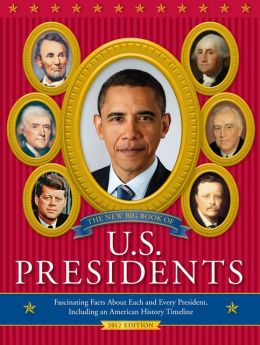
The New Big Book of U.S. Presidents

The New Big Book of U.S. Presidents
By Marc Frey and Todd Davis
Published by Running Press Kids (2013)

I believe every classroom library needs a book about U.S. Presidents. It can have so many uses! This book in particular has a page on each President with a substantial amount of information. There is biographical information and facts along with pictures and short boxes with information about an important event during that time or an influential person of the time. There is a running timeline that goes all throughout the pages giving great context information. This book is an amazing resource for your students. It can be used during any history lesson or time period study of the United States. Unfortunately, one cannot fit all the information in this one book, but this is a great start. This book is organized well and will be easy for students to navigate. If we want students to like history we have to make it interesting and easy to understand, just as this book does.

Check out Pinterest for great ideas when teaching about the U.S. Presidents.


Davis, T., & Frey, M. (2013). The New Big Book of U.S. Presidents 2008. Philadelphia: Running Press Kids.

My Brother Martin

My Brother Martin: A Sister Remembers Growing up with the Rev. Dr. Martin Luther King Jr.
By Christine King Farris
Illustrated by Chris Soentpiet
Published by Simon & Schuster Books for Young Readers (2003)

My Brother Martin tells the story of Martin Luther King Jr.'s childhood from the perspective of his sister Christine. A unique take on his life, the book gives student's a perspective of how he began his journey in the Civil Rights Movement. My one critique would be that the story had a few additional pages on his adult life, but overall I love this book. The illustrations are beautiful, with very realistic images and vibrant colors. This would be a helpful piece in learning about the civil rights movement in social studies, or writing from different perspectives in language arts. Because many students have siblings, they would easily relate to the story and its look at siblings and childhood.

Farris, C. K., & Soentpiet, C. K. (2003). My brother Martin: A sister remembers growing up with the Rev. Dr. Martin Luther King, Jr. New York: Simon & Schuster Books for Young Readers.

Tuesday, April 21, 2015

Flipped

Flipped by Wendelin Van Draanen
Published by Knopf 2001

Flipped is the winner of many awards. The novel has also been made into a movie. Check out the trailer below if my blog entry makes you want to learn more!

This realistic contemporary fiction explores the romance of two young people, Juli Baker and Bryce Loski. Juli always had a crush on Bryce, but Bryce did not feel the same way. When 8th grade rolls around, Juli's feelings are waning while Bryce begins to see Juli in a new light. The book is told by rotating between both of their voices from chapter to chapter. This romantic comedy will surely appeal to middle school girls. Both of the main characters are discovering who they are and are looking beyond the exterior of others in this coming of age story.

This would be a great book to recommend for students who also enjoyed The Fault in Our Stars. I will surely be watching the movie soon!

Van, D. W. (2001). Flipped. New York: Knopf.

Confetti: Poems for Children

Confetti: Poems for Children
(Confeti: Poemas para Niños)
By Pat Mora
Illustrated by Enrique Sanchez
Published by Lee & Low Books 1996

Confetti is a wonderful bilingual book for young children that gives them a taste of the southwest and its beautiful nature. The narrative, free verse poems are great for young readers. There is  mix of rhyming and free verse to show students that not all poems rhyme. It combines spanish and english in a great way, showing the experience of a young Mexican-American girl. They will especially connect with the young female perspective.  This vibrant illustrations of this book of poetry will be sure to keep students' attention. This would be an excellent book to have in your classroom library as many students have a hispanic background or are learning spanish in school. Poetry is a great way to share the culture of Mexican-Americans and the southwest.

Find out more about Pat Mora!

Mora, P., & Sanchez, E. O. (1996). Confetti: Poems for children. New York: Lee & Low Books.

Poetry for Young People- Lewis Carroll

Poetry for Young People- Lewis Carroll
Edited by Edward Mendelson
Illustrated by Eric Copeland
Published by Scholastic Inc. 2001

My cooperating teacher shared this book with me, and it is quite the treasure. I am teaching a lesson on the poem "Jaberwocky" by Lewis Carroll to my fourth graders. The nonsense poem comes from his famous Alice and Wonderland story. I am going to have the students listen to the poem and illustrate what they believe a Jaberwocky is. I think it will be a really cool lesson!

This book contains many of Lewis Carroll's poems with soft, watercolor illustrations. Many of the poems contain a short introduction with background information. For those students who love Lewis Carroll, this book is for them. It is directed towards older readers, probably grades four and up. His work could also provide a great text in the classroom for various activities such as poetry, powerful language, word choice, and fantasy. I will definitely be looking into more books like this one because I think a book like this can really get students to be interested in poetry.

Carroll, L., Mendelson, E., & Copeland, E. (2000). Lewis Carroll. New York: Sterling Pub. Co.

If Not for the Cat

If Not for the Cat
Haiku by Jack Prelutsky
Paintings by Ted Rand
Published by Scholastic Inc. 2004

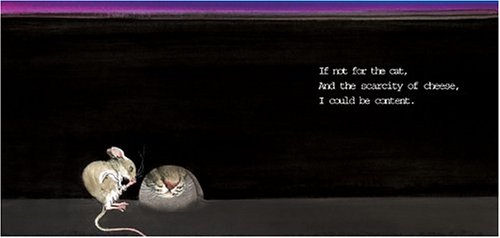
If Not for the Cat is a great piece of poetry by Jack Prelutsky. Each page contains a different animal haiku. One of my personal favorites is this one:

Wingless we went in,
But we emerged as fliers-
And oh, such colors!

The images of animals are quite realistic and colorful throughout. This piece of poetry would be a great model for students learning about haikus. It would be awesome to create your own classroom book of animal haikus like this one. It could connect well to a science lesson on animals. You can never go wrong with Jack Prelutsky!

Prelutsky, J., & Rand, T. (2004). If not for the cat: Haiku. New York: Greenwillow Books.

The Hunterman and the Crocodile

The Hunterman and the Crocodile: A West African Folktale
retold and illustrated by Baba Wagué Diakité
published by Scholastic Press 1997

Coretta Scott King Award

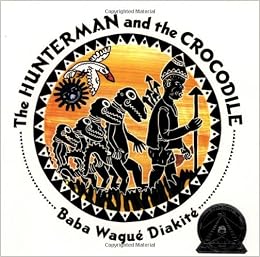
This folktale tells the story of three crocodiles who leave their home in the river and eventually become tired and famished. They meet a crocodile who they convince to take them back home to the river. They promise they won't eat him up as most crocodiles would do. However, when they return to the river, they question their choice and argue with right over wrong with the hunterman. Various animals weigh in on their opinions of the situation. The animals say that the crocodiles should eat the hunterman because of various things man does to the animals. At the end, a rabbit tells the man to bring the crocodiles back home to his family instead. Th man learns a valuable lesson, as his wife has fallen ill and needs the tears of a crocodile to live. The lesson to be learned is that man and nature must live in harmony.

I very much enjoyed this piece of literature. It would be a great mentor text for teaching write and wrong or respect for nature. The abstract illustrations really keep your intention. There is a mix of color and black and white along with watercolor backgrounds. It is a great book to show students the West African culture.

Diakité, B. W. (1997). The hunterman and the crocodile: A West African folktale. New York: Scholastic.

Tuesday, April 7, 2015

The War That Saved My Life

The War that Saved my Life by Kimberly Brubaker Bradley
Published by Dial Books (2015)

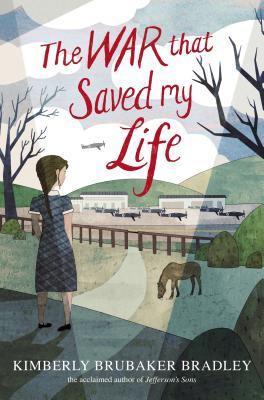
This piece of historical fiction takes place during World War II. The main character, Ada, is relatable to intermediate readers because she is nine years old. Ada and her brother are evacuated from their home and abusive mother in London during the war. Ada must overcome her disability with her twisted foot, but she does not let this stop her from learning to ride a horse or watching German spies. The children go to live with a woman and struggle to develop a trusting relationship with her. However, throughout the novel they all discover love and hope once again. The children are on a new adventure during a difficult time in history. 

I would recommend this novel because it takes a different viewpoint on WWII. It is interesting to hear the perspective of a young girl in London during the war. I think this novel would be a great addition to the classroom because it tells the story from the perspective of a young girl. It also has a touching theme of family, along with an adventure plot. This would be a great way to get students to read historical fiction, and it is new to the library!


Bradley, K. B. (2015). The war that saved my life.

Tuesday, March 17, 2015

One Crazy Summer

One Crazy Summer
By Rita Williams-Garcia
Published by Amistad (2010)

Winner of the Coretta Scott King Award in 2011
Newberry Honor Book in 2011
(plus many many more!)

Our class read this award winning novel and created lesson plans based on the story. The moving story takes place during the civil rights movement in Oakland, California. Three young girls, Delphine, Vonetta, and Fern fly out to visit their long lost mother. With few memories of her, it leads to an adventurous and crazy summer involving the Black Panthers. I can see why this book won so many awards. Rita Williams-Garcia keeps you engaged and laughing even during heavy topics.

It is a great way for young readers to see the civil rights movement from a child's perspective. Not all students may be ready for the hot topic, but it is important for all students to learn about. The book would be a great class read to connect to social studies. Thanks to my wonderful classmates I have some great lesson ideas too!

Williams-Garcia, R. (2010). One crazy summer. New York: Amistad.

Friday, March 6, 2015

Stone Soup

Stone Soup by Marcia Brown
Published by Antheneum Books for Young Readers 1947

Caldecott Honor Book

I heard about this book from my professor last semester. She told us about how she would make stone soup with her students after she read the book.

The story of Stone Soup is an old tale of three hungry soldiers who are looking for food and somewhere to sleep. The villagers don't have much food and don't want to share with the soldiers. The soldiers trick the villagers into making soup by beginning the soup with three smooth stones. They end up with a delicious soup for all the village after their sneaky requests.


Young students would love this story, and I am sure they would love making stone soup! The book uses only brown and orange illustrations with detailed character faces.


There are lots of fun activities for using Stone Soup in the classroom! Check out this alternate version of the story...

Brown, M., & Charles Scribner's Sons. (1947). Stone soup: An old tale. New York: Charles Scribner's Sons.

The Egyptian Cinderella

The Egyptian Cinderella by Shirley Climo
Illustrated by Ruth Heller
Published by Thomas Y. Crowell 1989

The Egyptian Cinderella puts a twist on the classic Cinderella fairytale most of us know. While the plot remains the same, characters from the historical past of Egypt are used instead. The book has many classroom applications whether it be through social studies and ancient Egypt, or comparing and contrasting in literature and fairytales.

The illustrations are vibrant and detailed, making you feel like you are in ancient Egypt. I would highly recommend this book for an upper elementary classroom. It is a sophisticated piece of children's literature that will appeal to older students.

Climo, S., & Heller, R. (1989). The Egyptian Cinderella. New York: Crowell.

Tuesday, March 3, 2015

The Miraculous Journey of Edward Tulane

The Miraculous Journey of Edward Tulane by Kate DiCamillo
Illustrated by Bagram Ibatoulline
Published by Candlewick Press 2006

short chapter book for ages 7-10 (200 pages)

The Miraculous Journey of Edward Tulane follows the adventure of a prideful china rabbit named Edward who lives with a young girl named Abilene on Egypt street. He is always dressed to the nines and treated as one of the family. Eventually, on Abilene’s family trip to England, Edward flies overboard only to be picked up by a fisherman named Lawrence. Lawrence’s wife Nellie befriends Edward, and takes care of him. Lolly, Lawrence and Nellie’s daughter, throws him into the garbage. Bull, a rail rider, and his dog Lucy find Edward and carry him along with them as they travel. Later, he is thrown off of the train and found by a young boy named Bryce. Bryce brings Edward to comfort his young sister, Sarah Ruth, who is ill. After Sarah Ruth passes away, Bryce runs away and brings Edward with him. Edward is involved in an accident that breaks him to pieces. Bryce cannot afford to pay the doll maker to fix him so the doll maker keeps Edward and mends him back together. He remains on the shelf for several years before Abilene’s daughter picks him out at the store. The story comes full-circle on one very miraculous journey.


      I would highly recommend this novel for either a read aloud or literature circle. Throughout the novel, detailed pencil illustrations enhance the story and set the context for the chapter. Check out the website for more information!


DiCamillo, K., & Ibatoulline, B. (2006). The miraculous journey of Edward Tulane. Cambridge, Mass: Candlewick Press.

Little Red Riding Hood

Little Red Riding Hood 
retold and illustrated by Trina Schart Hyman (originally by Grimms)
Published by Holiday House 1983
Caldecott Honor Book

Growing up, Little Red Riding Hood was one of my favorite and most memorable fairytales. As Little Red Riding Hood brings her beloved grandmother some wine and bread to make her feel better, she encounters a wolf who leads her astray to pick wildflowers while he sneaks into the grandmother's house and eats her right up! When little red riding hood arrives to her grandmother's, she discovers the wolf and is also eaten right up. A hunter hears the wolf snoring after his meal. He realizes the wolf has eaten the grandmother and little red riding hood so he cuts open the wolf's stomach and frees them. He takes the wolf with him, and grandmother and little red riding hood finally enjoy the bread, wine, and tea.

This particular version has illustrations by one of my favorite illustrators. She also illustrated A Child's Calendar, another one of my favorites! Her illustrations are well detailed; she uses soft black lines to make the colors pop off the pages. Each page is filled with hidden details that make you wan
t to search the page to discover what is there.

Hyman, T. S., Grimm, J., & Grimm, W. (1983). Little Red Riding Hood. New York: Holiday House.

The Ugly Duckling

The Ugly Duckling by Hans Christian Anderson
Illustrated by Adrienne Adams
Published by Charles Scribner's Sons 1965

The Ugly Duckling is a classic piece of literature by the notable Hans Christian Anderson. The tale tells the story of duckling whose outward appearance is quite different from the rest of his brothers and sisters. He is constantly teased by others for his ugly appearance and struggles to fit in anywhere. Eventually he sees his reflection in the water and discovers he has turned into a beautiful swan who is loved by all. He finally fits in and feels happiness to belong.

This story would be a great text for all ages; it provides an important lesson on how we treat others based on assumptions and outward appearance. I think it is an important story for all children to hear, especially with the incidences of bullying in schools today.

This version particularly, has beautiful and detailed images with soft watercolor pictures.

Andersen, H. C., Adams, A., & Keigwin, R. P. (1965). The ugly duckling. New York: Scribner.


Monday, March 2, 2015

A Wreath for Emmett Till

A Wreath for Emmett Till by Marilyn Nelson
Illustrated by Philippe Lardy
Published by Houghton Mifflin Company 2005

Coretta Scott King Honor Award
Michael L. Printz Award for Excellence in Young Adult Literature from the American Library Association

This book takes on an important issue of the civil rights movement: Emmett Till and his lynching. I feel the author's explanation of her purpose for wiring this story into poetry is best explained through her own words. Regarding the writing of the poem she says, "I was nine years old when Emmett Till was lynched in 1955. His name and history have been a part of most of my life. When I decided to write a poem about lynching for young people, I knew I would write about Emmett Till. he was lynched when he was the age of the young people who might read my poem. After revisiting what I knew about lynching, reading more about it, and growing increasingly depressed, I also knew that I would write this poem as a heroic crown of sonnets. A sonnet is a fourteen- line rhyming poem in iambic pentameter. The rhyme scheme I chose to use in these sonnets is called Italian, or Petrarchan. A crown of sonnets is a sequence of interlinked sonnets in which the last line of one becomes the first line, sometimes slightly altered, of the next. A heroic crown of sonnets is a sequence of fifteen interlinked sonnets, in which the last one is made up of the first lines of the preceding poem".

This novel was difficult to read, but it gave a new perspective on an important issue of America's history. It would be a great mentor text or contributing text for a study on the civil rights for older students. The novel contains abstract imagery with colors that set the mood for each of the sonnets. At the end, an acrostic poem is formed, showing another type of poetry that students can utilize. It also provides notes on each of the sonnets she references in her poetry along with a brief story of Emmett Till.

I found a great online resource for using this piece of poetry in the classroom!

This piece of literature shows that poetry has the power to express even the darkest of things in a new light.

Nelson, M., & Lardy, P. (2005). A wreath for Emmett Till. Boston: Houghton Mifflin.

Thursday, February 19, 2015

Bud, Not Buddy

Bud, Not Buddy by Christopher Paul Curtis
Published by Delacorte Press 1999

Newberry Honor Book
Coretta Scott King Honor Book
ALA Notable Book
ALA Best Book for Young People
A Horn Book Fanfare
A Bulletin Blue Ribbon Book
A New York Times Book Review Best Book
A Publishers Weekly Best Book

With all these awards, you can see Bud, Not Buddy is a must read book. It was a book I could easily relate to because I grew up and still live in Michigan. It tells the story of ten year old Bud, a motherless boy, during the Great Depression. He runs away in search of his father with a suitcase of important things, and a flyer that he believes will lead him to his father. The book follows Bud's adventure to find his father.

Bud, Not Buddy would be a great book to read when learning about the Great Depression and all that is associated with that era such as jazz music.

This blog has some great project ideas related to the book!

Curtis, C. P. (1999). Bud, not Buddy. New York: Delacorte Press.

Make Way for Ducklings

Make Way for Ducklings by Robert McCloskey
Published by The Viking Press 1941

 The Caldecott Medal 1941

Make Way For Ducklings is a classic children's book that has been around for generations. It tells the story of a family of ducklings, the Mallards, who travel through the parks of a big city to eventually settle on a small island in the Boston Public Garden.

What makes this book so special is the illustrations. The brown pencil drawings and attention to detail can easily be noticed. The drawings appear textured with the use of line and pattern.

This story would be a great read aloud for young students because it is definitely a page turner. I still recall one of my professors reading this book to my class and showing us a video of it. I knew it was a book that I want part of my children's literature collection.


McCloskey, R., McCloskey, R., Viking Press., Duenewald Printing Corporation., & Affiliated Lithographers. (1941). Make way for ducklings. New York: Viking Press.

Wednesday, February 18, 2015

The Hundred Dresses

The Hundred Dresses By Eleanor Estes
Illustrated by Louis Slobodkin
Published by Harcourt Brace & Company 1944

Newberry Honor Book

The Hundred Dresses is a powerful story for young students to hear on compassion, kindness, and doing what is morally right. Students can be cruel to one another in school. Wanda, a shy student in the class is the victim of teasing from other girls in the class due to her hand-me-down clothes. One of the young girls, Maddie, begins to feel bad for her actions, but can't seem to bring herself to say anything. Eventually Wanda does not return to school, which worries Maddie. However, the impending drawing contest takes over the focus. When the contest comes to a close, Wanda returns to school to show off her drawings of hundred different dresses all over the classroom. Wanda wins the contest but does not return to school as her family moves away to an area where she won't be made fun of. Maddie and her friend Peggy try to make it up to Wanda, but realize that you cannot always make amends.

This book is excellent for students in grades 3-5. It is part chapter book, part picture book. It is an easily relatable story for students that teaches an important lesson for all students to hear. The Hundred Dresses exemplifies the Golden Rule. The whimsical illustrations with blended lines and soft colors catches the readers eye and adds imagery that enhances the story.

Scholastic.com provides a lesson plan that may be helpful if bullying is an issue in your class, or you just love the book like I do!

Estes, E., & Slobodkin, L. (1944). The hundred dresses. New York: Harcourt, Brace and Co.

Tuesday, February 17, 2015

A Child's Calendar

A Child's Calendar
Poems by John Updike
Illustrations by Trina Schart Hyman
Published by A Holiday House Book 1999

Caldecott Honor Book 2000

A Child's Calendar brings me back to my childhood. When I discovered it in the library recently, memories rushed over me of the times I would sit in bed with this book of poetry and try to read its beautiful pages. As I perused through its pages once again, I can see why I was so attached to it. A Child's Calendar follows the activities of children as they pass through the twelve months of the year.  Each poem contains four to six stanzas with rhyming lines. The poetry is wonderful, but what really catches the readers eye is the detailed watercolor illustrations. You can feel each month through the colors used in the realistic pictures. The same children's faces are used throughout, which makes it like a treasure hunt to see if you can spot each one. I believe this book should be a staple in each home!

This would be an excellent mentor text for poetry. I can see myself easily using A Child's Calendar to create a classroom calendar with poetry from each student. It would be a great way to incorporate science and seasons with poetry.


Updike, J., & Hyman, T. S. (1999). A child's calendar. New York: Holiday House.


Flora and Ulysses: The Illuminated Adventures

Flora and Ulysses: The Illuminated Adventures
By Kate DiCamillo
Illustrated by K.G. Campbell
Published by Candlewick Press 2013

Newberry Medal Winner 2014

Kate DiCamillo is one of my all time favorite children's authors. With all her awards, many would find it hard to disagree that she is one of the best. If you aren't familiar with Kate check out her website to learn more!

If you want a good laugh for both you and your students, Flora and Ulysses is the book for you.  Flora and Ulysses tell the wild adventure of a squirrel with magical powers and his cynical friend Flora Belle Buckman. Flora befriends the poor squirrel who is vacuumed up by her neighbor, Mrs. Tickham’s powerful vacuum. She names him Ulysses, after the multi-terrain vacuum that sucked him up. Flora’s mother, an avid writer, is not pleased with having a squirrel in the house, but Flora claims that Ulysses is a super hero and her friend. Flora’s mother does not believe and plans to kill the squirrel. Mrs. Tickman believes Flora and tries to help her. Mrs. Tickman’s great nephew, a young man Flora’s age, joins the fun and develops feelings for Flora. Flora initially despises him, but soon grows to appreciate his presence. Flora’s father supports his daughter and her superhero-squirrel friend. The three of them go on a wild adventure that includes a diner disaster and a run in with a special cat and so –called “Dr.” Meescham. Throughout the novel, Flora joins forces with Ulysses to conquer evil. The two develop a strong friendship and defy odds to remain together even after Flora’s mother kidnaps Ulysses and tries to kill him with a shovel. After all the commotion and evil-fighting, all come to see Ulysses as a superhero who manages to bring all of Flora’s loved ones into her life again. He also manages to turn her from a cynic to one who sees love in the world.


The novel also contains black and white pictures, and reads like a graphic novel in some places. The illustrations greatly enhance the writing and make the story come alive in your mind. It would also be beneficial for visual learners. This novel would be a great read aloud for a young classroom, or could be a great classroom book for a unit study. I could easily read this book over and over and I would still laugh each time. 

For more resources check out the Flora and Ulysses Website here!

DiCamillo, K., & Campbell, K. G. (2013). Flora & Ulysses: The illuminated adventures. 

Friday, February 6, 2015

Alexander and the Terrible, Horrible, No Good, Very Bad Day

Alexander and the Terrible, Horrible, No Good, Very Bad Day by Judith Viorst
Illustrated by Ray Cruz
Published by Anthem Books for Young Readers (1972)

"It has been a terrible, horrible, no good, very bad day. My mom says some days are like that."

These are words that I have heard from my own mother on many occasions. We have all had those days where nothing goes our way. Alexander has a terrible, horrible, no good, very bad day, from beginning to end. Nothing seems to go his way. This makes him want to move to Australia. Alexander realizes that some days are just going to be this way, even in Australia.

This longer picture book, approximately 25 pages, contains detailed pencil drawings. The black and white drawings are not typical of most colorful picture books. Great attention has been paid to each illustration. I wish the book had a sequel about a very good day for Alexander. The book has been recently adapted to a movie. Check out the trailer!

After reading in your classroom, the book could be used as inspiration for students dealing with emotions from a very bad day. If students are having a bad day or something is upsetting them, they can take a flag of Australia and move to a separate space in the room to calm down and reflect. This is a great classroom management technique. Students and teachers can learn a lot from Alexander!
Viorst, J., & Cruz, R. (1972). Alexander and the terrible, horrible, no good, very bad day. New York: Atheneum.

Monday, January 26, 2015

The Bat Boy & His Violin

The Bat Boy & His Violin by Gavin Curtis
Illustrated by E.B. Lewis
Published by Simon & Shuster (1998)
Coretta Scott King Award

The Bat Boy & His Violin takes place around the 1920s and 1930s during the time of the Negro National Baseball Leagues. Reginald, a young boy is a gifted violinist. He spends all his free time practicing in the house. His father is manager of the Dukes, the worst Negro team in the league. They need a bat boy, so his father selects Reginald to come be the bat boy of the Dukes. Reginald is not thrilled with the decision because he doesn't think he will have enough time to practice his violin. He begins as a bat boy and struggles at his duties. His father tells him to take a break and play his violin. As he plays his violin, the Dukes start to play better and end up winning their game. The Dukes credit their victory to Reginald and his violin. When they play their final game of the season against the best team of the league, they narrowly lose and Reginald feels bad he couldn't help them win. His father reassures him that his violin playing was a huge part of their success. He finally gets to perform in from of the team, family, and friends at his home; it was a recital to remember for Reginald.

While the story is fiction, it takes place in the historical framework of segregation. It would fit well into a history unit about segregation and baseball at that time in American history. It would give students a good view into the life of some people during that time. It also has a large music theme. Students who play the violin could easily understand Reginald's position. It could be a supporting book to a unit on Bud, Not Buddy also due to its music theme and historical placement.

The detailed water-color illustrations catch your eye. E.B. Lewis researched the time period in order to make his paintings most realistic. The language is a bit difficult for young readers.

The Coretta Scott King Award alone shows that this book represents the ideals of peace, non-violent social change, and brotherhood. This is a positive book to connect to our nation's past.

Curtis, G., & Lewis, E. B. (1998). The bat boy & his violin. New York: Simon & Schuster Books for Young Readers.

The Important Book

The Important Book by Margaret Wise Brown
Pictures by Leonard Weisgard
Published by Harper and Row (1949)

I first heard about The Important Book last semester thanks to one of my Education professors. She shared some of the book with the class. I knew I just had to read the book because it feels like a classic piece of children's literature.

The story is written in a repetitive, almost poem-like, nature. It starts each page with the line, "The important thing about ___(noun)_____ is that_______. It is followed by a couple sentences about various details about the noun, and ends with the same sentence it began with to reiterate its main point. The book talks about several ordinary items such as spoons, shoes, the sky, snow, and apples. I included a picture of the last page of the book which is my absolute favorite.

This book has many applications in the classroom. It is a great book to use at the beginning of the year for students to talk about themselves and what makes them important and different. One of my classmates read this book to a class of 4th graders and had them choose something they wanted to write about. She compiled their pages into a classroom book of important things. I love that idea! This book challenges students to look at simple items such as a daisy or the wind and really think about what makes that thing different from the rest of the world. The Important Book could be used in a variety of grade levels also.

The illustrations in the book are fairly life-like. Leonard Weisgard uses both color and black and white to give the reader various perspectives.

I would highly recommend that The Important Book has a place on the shelf in every teacher's classroom!

Brown, Margaret Wise, and Leonard Weisgard. The Important Book. New York: Harper, 1949. Print.

The Lemonade Club

The Lemonade Club by Patricia Polacco
Published by Philomel Books (2007)

The Lemonade Club is not your ordinary children's book; it tackles the tough topic of cancer. The story follows two 5th grade girls who are best friends, Traci and Marilyn. They love their teacher, Miss Welchelman and her inspirational story of making lemons into lemonade. Marilyn eventually becomes ill with Leukemia and undergoes chemotherapy. Traci remains by her side, along with Miss Welcheman. When Marilyn returns to school, embarrassed by her lack of hair, she finds out that the rest of the class shaves their heads in camaraderie, even Miss Welchelman. As everyone's hair starts to grow again, Traci and Marilyn notice that Miss Welchelman's hair does not grow back. She tells the girls that she has breast cancer. The girls rally around her and remind her of the dreams and hope that she gave to the girls as their teacher. At the end of the story, 5 years later and cancer-free, Miss Welchelman gets married with Traci and Marilyn at her side. It is truly a story of hope and courage. It is based off of a true story as Traci is Patricia Polacco's daughter.

I would highly recommend this book to any classroom that has a student with cancer. It is appropriate for an older audience. Even as an adult, I found the storyline tough to handle. It's probably because everyone knows someone who has dealt with cancer. This makes the story hit home to many and really touch at one's heart. It is an excellent book to teach students how to show empathy and compassion.

The illustrations are classic Patricia Polacco. The characters appear quite realistic with the pencil drawings. The characters' faces are filled with emotions and feelings, giving you a better look at how the characters are feeling. This piece of literature gives a whole new meaning to the phrase, "When life gives you lemons, make lemonade". Patricia Polacco has put a "sweet" spin on a "sour" subject!

Polacco, P. (2007). The Lemonade Club. New York: Philomel Books.