Showing posts with label Caldecott Honor. Show all posts

Thursday, April 23, 2015

Rosa

Rosa
By Nikki Giovanni
Illustrated by Bryan Collier
Published Henry Holt and Company (2005)
Caldecott Honor Book

Rosa Parks is an influential woman in American history, especially civil rights history. We have all heard her story countless times, but this book really makes you think and hear her story in a new light. The narrative keeps the reader engaged and eager to read more. It presents history is an easy to understand fashion. I love this version of the story, and I think students would also really enjoy it. It makes a connection to the Emmett Till case which is unique and important historically. At the end, there are two fold out pages that expand on the impact that Rosa Parks had on the United States. She is one inspirational woman!

The illustrations are a mix of collage and water color. In the illustrators note at the beginning, Collier said he wanted it to appear as if Rosa Parks is glowing or illuminating throughout because she is such a light of the world. I thought this was a beautiful tribute to a leading civil rig
hts leader.

This book would get great use in your classroom, whether through social studies, writing, or even art. This is an excellent piece of children's literature.

Giovanni, N., & Collier, B. (2005). Rosa. New York: Henry Holt.


Friday, March 6, 2015

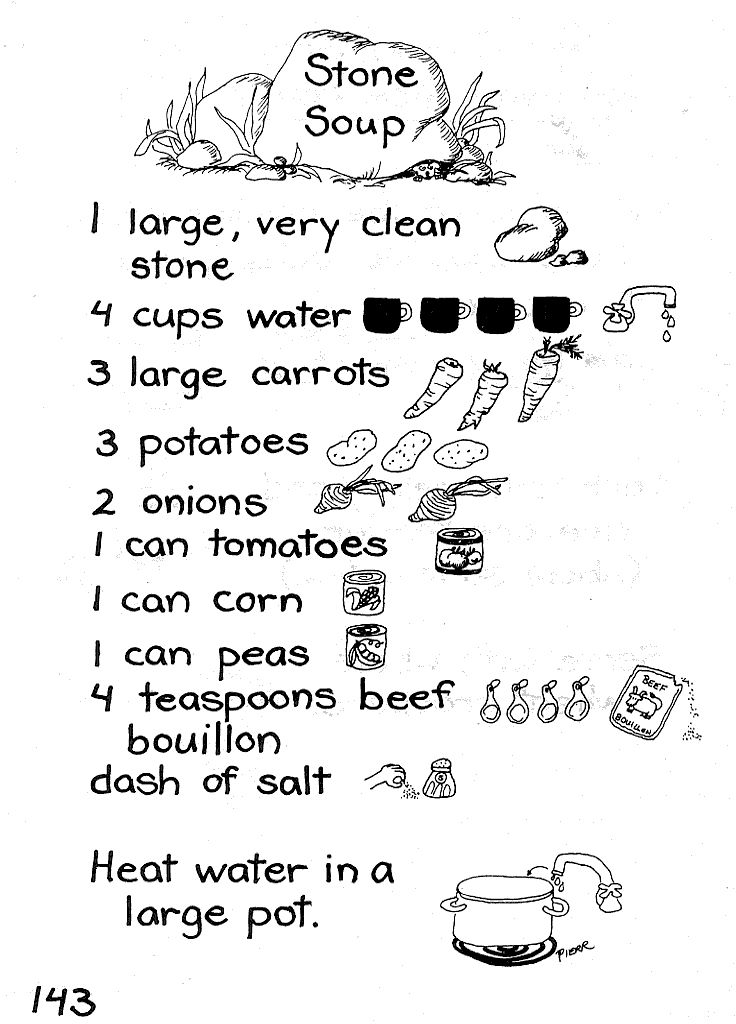
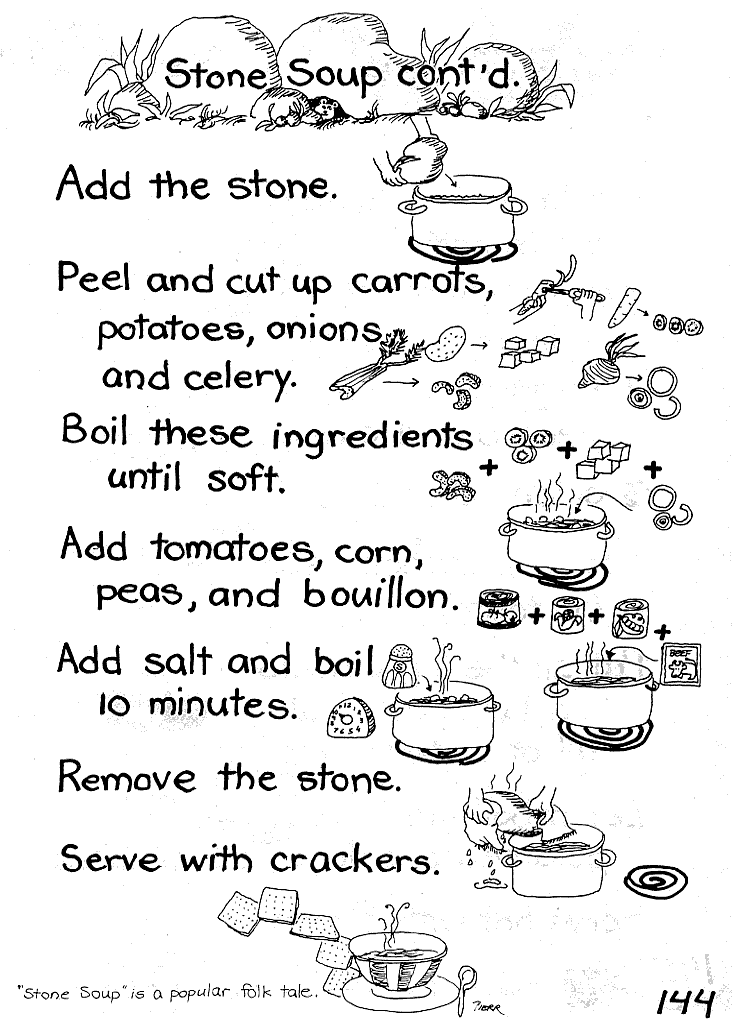
Stone Soup

Stone Soup by Marcia Brown
Published by Antheneum Books for Young Readers 1947

Caldecott Honor Book

I heard about this book from my professor last semester. She told us about how she would make stone soup with her students after she read the book.

The story of Stone Soup is an old tale of three hungry soldiers who are looking for food and somewhere to sleep. The villagers don't have much food and don't want to share with the soldiers. The soldiers trick the villagers into making soup by beginning the soup with three smooth stones. They end up with a delicious soup for all the village after their sneaky requests.


Young students would love this story, and I am sure they would love making stone soup! The book uses only brown and orange illustrations with detailed character faces.


There are lots of fun activities for using Stone Soup in the classroom! Check out this alternate version of the story...

Brown, M., & Charles Scribner's Sons. (1947). Stone soup: An old tale. New York: Charles Scribner's Sons.

Tuesday, March 3, 2015

Little Red Riding Hood

Little Red Riding Hood 
retold and illustrated by Trina Schart Hyman (originally by Grimms)
Published by Holiday House 1983
Caldecott Honor Book

Growing up, Little Red Riding Hood was one of my favorite and most memorable fairytales. As Little Red Riding Hood brings her beloved grandmother some wine and bread to make her feel better, she encounters a wolf who leads her astray to pick wildflowers while he sneaks into the grandmother's house and eats her right up! When little red riding hood arrives to her grandmother's, she discovers the wolf and is also eaten right up. A hunter hears the wolf snoring after his meal. He realizes the wolf has eaten the grandmother and little red riding hood so he cuts open the wolf's stomach and frees them. He takes the wolf with him, and grandmother and little red riding hood finally enjoy the bread, wine, and tea.

This particular version has illustrations by one of my favorite illustrators. She also illustrated A Child's Calendar, another one of my favorites! Her illustrations are well detailed; she uses soft black lines to make the colors pop off the pages. Each page is filled with hidden details that make you wan
t to search the page to discover what is there.

Hyman, T. S., Grimm, J., & Grimm, W. (1983). Little Red Riding Hood. New York: Holiday House.

Tuesday, February 17, 2015

A Child's Calendar

A Child's Calendar
Poems by John Updike
Illustrations by Trina Schart Hyman
Published by A Holiday House Book 1999

Caldecott Honor Book 2000

A Child's Calendar brings me back to my childhood. When I discovered it in the library recently, memories rushed over me of the times I would sit in bed with this book of poetry and try to read its beautiful pages. As I perused through its pages once again, I can see why I was so attached to it. A Child's Calendar follows the activities of children as they pass through the twelve months of the year.  Each poem contains four to six stanzas with rhyming lines. The poetry is wonderful, but what really catches the readers eye is the detailed watercolor illustrations. You can feel each month through the colors used in the realistic pictures. The same children's faces are used throughout, which makes it like a treasure hunt to see if you can spot each one. I believe this book should be a staple in each home!

This would be an excellent mentor text for poetry. I can see myself easily using A Child's Calendar to create a classroom calendar with poetry from each student. It would be a great way to incorporate science and seasons with poetry.


Updike, J., & Hyman, T. S. (1999). A child's calendar. New York: Holiday House.